♣ Puritan’s Timeless Influence
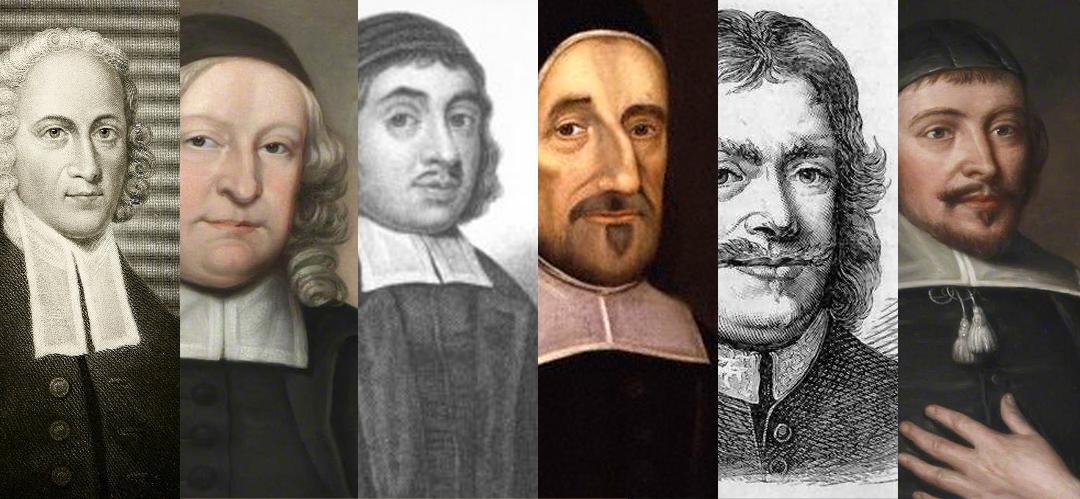
WHEN IT COMES to the very concept of the Puritans, many of us in today’s era either react in a way of disrepute, disgust, irrelevance or just sheer boredom. Some are ignorant of such an age, while some who are familiar with that part of history may feel they are beneath them; not holy enough to attain such high levels of moral and ethical standards. Still yet, others may scorn the Puritans as being self-righteous and pure killjoys.
Whatever stigma has been attached to such a group of people from the 1560’s to say around the early 1700’s, let us take into factual account that practically most groups of people or movements that we witness today may have good and bad values contained within them. I argue this point from the perspective that oftentimes a movement may start with good intentions until others jump on board and steer the ship into other directions. Putting it another way: white vans or trucks being used for commercial work are recognised as a means for assisting and serving a community, and so everyone adopts this mentality. That viewpoint is suddenly changed when multiple terrorist acts are carried out when white vans are utilised to carry out their goals; some people may now automatically assume when a white van rushes by that some kind of massacre is about to let loose. It may or may not. Let us take another example: say a married couple join a reformed church that is thoroughly biblical in their confession, and nothing can be faulted in their teaching, but the lifestyle of the church may not reflect what they teach. The pastor may be too impatient, or detached from the congregants, the pastor’s wife might be aggressive, arrogant and abrupt in her ways, while some members of the church may be unsympathetic, insensitive and just downright rude. Not everyone in that church is like that, but just a small handful of people can give that overall impression. That doesn’t entail that all reformed churches are of like manner, and certainly should not bear resemblance on what the Protestant Reformation was really about, imperfect as such a great movement initiated and guided of God was. It is the same with God spiritually awakening/reviving a church, a district, county, or country. The Holy Spirit is moving in powerful ways infinitely beyond human capacity and ability, but then there may be times in certain areas when demonic influences will, with great effort, aim to disrupt, drive to extremes and destroy the work of God. Despite such disturbances, to entirely strike off such glorious phenomena as the work of the devil would be absurd, even blasphemous.
Much distaste that pervades the majority of people’s thinking today in regards to the Puritans are mere unsubstantiated generalisations, or bite size misguided information of what they’ve heard or briefly read by someone else, without having personally studied such lives to arrive at a correct conclusion and analysis themselves, but as Joel Beeke rightly said, “… the criticism that the Puritans were legalistic never seems to go away. If people paid attention to the whole of the Puritan theology, however, they would likely find themselves rethinking that criticism.”
How Tom Webster coined the Puritans is so pertinent, “Puritans had a dynamic fellowship with God that shaped their minds, affected their emotions, and penetrated their souls. They were grounded in something and someone outside of themselves: the triune God of the Scriptures. Second, Puritans embraced a shared system of beliefs grounded in the Scriptures. Today we refer to this system as Reformed orthodoxy. Third, on the basis of their common spiritual experience and unity in the faith, the Puritans established a network of relationships among believers and ministers.” As Joel Beeke stated, “This fellowship of cooperative brotherhood was born in sixteenth-century Elizabethan England and developed in seventeenth-century England and New England. The distinctive character of Puritanism was its quest for a life reformed by the Word of God. The Puritans were committed to search the Scriptures, organise and analyse their findings, and then apply them to all areas of life. They had a confessional, theological, and trinitarian approach that urged conversion and communion with God in personal, family, church, and national life.”
J.I. Packer succinctly explained this movement very well: “Puritanism was an evangelical holiness movement seeking to implement its vision of spiritual renewal, national and personal, in the church, the state, and the home; in education, evangelism, and economics; in individual discipleship and devotion, and in pastoral care and competence.”
When we look back at the Puritans in comparison to where evangelicalism stands in our current day, Beeke – several years ago – poignantly wrote, “In many evangelical circles today, Puritan theology is still marginalised. While the Puritans built palaces, we are comfortable building shacks; where they planted fields, we plant but a few flowers; while they turned over every stone in theological reflection, we content ourselves with pebbles; where they aimed for comprehensive depth, we aim for catchy sound bites.” We certainly live in a day where the majority of us live by “sound bites” because our lives have never been more demanding, but what most of those demands really spell out are nothing more but mere distractions and a wrong prioritising of the decisions we make. Martin Luther’s lifestyle was so heavily demanding that he had to be three to four hours in prayer before anything else. Today, that would sound preposterous if such a regime were expected of us – but would it? Earnestly putting God first in our day would radicalise our lives; there’d be some serious re-evaluating of our priorities, and a lot of things would be dropped as a result of getting serious with God.
Despite Puritanism still being marginalised, as Beeke said, there is a current wide and growing interest in returning unto the lives and works of Puritanical theology. And why is that? Well, one main reason is, for decades churches have been seeking new formulas to grow their congregations, most of which are based on secular business approaches. Such methods do away with the old to bring in something new, fresh and dynamic, but much present activity that swarms most churches is entertaining goats rather than feeding Christ’s true sheep. There is more emphasis on being trendy and keeping up with the times of the world in all of its communication, activity and technology, than faithful Spirit-filled preaching and teaching. Such a mode has been considered outdated. Seldom can people concentrate on a biblical message that lasts one hour, and yet, those same people have no issue watching and relishing a movie that has a duration of at least two hours, or someone else engrossed for six hours – at least – with an Xbox game. So, as a result of faithful systematic biblical teaching neglected, in favour to keep and numerically accelerate a church, we have a system of teaching that is no better than our most popular secular motivational talks so easily accessed via many podcasts. It may inspire for a short duration of time, but has no life-changing power. People are left with a sense of hollowness via a teaching that cannot convert, nourish or restore the soul in its pursuit of God. There is no eternal substance in much of so-called ‘biblical’ teaching nowadays. However, when one – who is truly hungry after God – hears or even reads snippets of what the Puritans uttered, something happens. It is like frequenting a popular cafe that has a standard menu that only curbs ones hunger unsatisfyingly, but then a once renowned restaurant reopens with rich, wholesome, taste bud-blowing food that really hits the spot and people are struck with amazement. Just one paragraph from a well-known Puritan will greatly feed your soul for the day and turn your life around. It will wound, convict, comfort, heal, encourage… all in all, it will turn your gaze straight back to God Himself. No wonder they were referred to as physicians of the soul. Much of what comprises our Christian bookshops nowadays are but mere faint candle lights – if that – and much of what was written four hundred years ago is like the blazing sun. There is such a weight to their works that is hardly ever found today in modern authorship. I would go as far as stating that nothing of today surpasses such works of centuries gone by.
Another reason why many are put off reading the Puritans are the depths to which they probed the human heart and conscience. Their writings will certainly shine light on the hypocrite and false convert, but give tremendous comfort to suffering and tempted sons and daughters of God. Of course, reading Puritan material is not always comfortable, and it certainly does not stroke one’s ego – far from it! We live in a day where we shun and even condemn introspection in the same manner we dislike bad weather as it confines us to indoors, and oftentimes has a tendency to make us look inward; we are left to face ourselves, and sometimes we don’t like what we see. Rainy days are days of contemplation that many despise. “Search me, O God, and know my heart! Try me and know my thoughts! And see if there be any grievous way in me, and lead me in the way everlasting!” (Psalm 139:23-24). How many of us have daringly prayed that? We prefer our boat not to be rocked, but when God reveals dark areas in our life, we are not going to get off the hook any easier than Isaiah (6:5). God will have us see our hearts, and that will entail being beside ourselves until we have no confidence in ourselves; God is ever moving us away from self-orientated living to where His will takes its place – “the way everlasting.” Reading through John Owen’s ‘Mortification of Sin’ is not an easy read; it is heart-searching, convicting, and reassuring, but never for one moment regrettable; many indeed have been truly blessed – in more ways than one – to have read it.
Writers today are seldom of the spirit of Puritans that have similar impact in the way they did. That’s not to say we copy the era and ways of them; to sound like them in speech, or the use of their mannerisms; times have moved on, but that doesn’t negate how we ought to imitate their fervency and fierce loyalty unto Christ in our day and age.
For anyone to state that puritanical reading is dry and dull have either missed the heart of the message, or they are drawn to what appears to be more relevant in current reading trends, and more often than not, the majority of books read – or listened to via audio – today cater around self-motivation, self-development, even the keys to success and happiness.. This is not a sweeping statement, but hard-core truth. No wonder that what comprises our church services is to serve its congregation with entertainment for fear of running them off with boredom. We have forfeited the true power of the Gospel as we build the church the way in which the world approves. We don’t need inspirational and self-developing messages that build up our egos. We don’t need messages that are humanistic to its very core which is the very opposite to biblical Christianity.
The Puritans were self-effacing. They knew of brokenness, of the depravity of sin in their lives and knew the futility of trusting themselves. They were all different in temperament in having varied personalities, but they didn’t get in the way of God; such was the impression of eternity and of God’s holiness upon them that they exemplified John the Baptist’s statement, “He must increase while I decrease.”
You can have a person charismatically speaking the truths of God and yet whose life does not match up, just as much as you can have another speak truth in such a dull fashion; both are wrong, but have someone speak truth who is dead unto themselves, unto the world, and cares nothing but for the glory and honour of God, and we have a minister of God’s Word clothed with holy power. Where is that today? How self so subtly masquerades itself where ego and self-image is elevated, admired – even worshipped. How so many pastors and leaders get up at the front of the church to speak, confident in themselves, self-assured in what they have immaculately and meticulously prepared, but get the apostle Paul who’s among the greatest preachers in church history, witnessing revelations that he could not even utter, and yet preached with fear and trembling, knowing his own weakness and insufficiency. Leaders are not broken today, not broken enough to look and sound unappealing to the flesh so that the spirit of Christ rests on them to preach with power. Does this generation of ministers know this secret, or are they content to just stay professional? Dare I say hardly any leader does, but when you do come across one, there is something beautiful beyond words; you detect human weakness for sure, but that is overshadowed with the aroma of Christ, the presence of Christ until all that is seen is Christ – THAT is preaching. THAT is God’s man.
The likes of John Owen, Stephen Charnock, Thomas Watson, Samuel Rutherford, Thomas Boston, Richard Baxter, John Flavel, Richard Sibbes, John Bunyan, Thomas Goodwin – on the list goes – saw and heart-warmingly felt the glory of God as eternity was more real than the three-dimensional world around them. They were men who knew God; they were men who communed with God in three Persons of the Holy Trinity. They were men whose theology was theocentric and christocentric. Someone once said that, “If one were to cut John Bunyan, he would bleed nothing but the Scriptures.” They knew God through fervent prayer and were serious for His cause, honour and glory, and though long passed away in flesh, their writings still live and shall far-outlive other works of self so prevalent today; their work shall prevail until Christ returns in glory.
“‘I will not give My glory to another’, says the Lord” (Isaiah 42:8), and when one comes to consider a man who was heavily influenced and immersed in the writings of the early Puritans, Daniel Rowland – a man who was used mightily amidst the Welsh Great Awakening of the eighteenth century, it makes one wonder how so extreme few ministers of the Gospel – if any – are clothed with power today. Rowland was genuinely consumed for the glory of God; he dared not touch such glory for himself. Does it not make one wonder today how we therefore see so little of it?
Church history has not been finalised; there’s still more to be written; God raise up more like that of the Puritans; God raise up the likes of Daniel Rowland in our day and age, that more will record and tell of the mighty and awesome wonders of God in a new generation.
Posted on July 12, 2025, in Devotionals and tagged apostle Paul, biblical Christianity, broken for God, Brokenness, christian bookshops, christocentric, church history, church leaders, Clothed with God's power, Daniel Rowland, devotional, eternity, glory of God, God’s Word, Holy Trinity, honour of God, Isaiah 42:8, J.I. Packer, Joel Beeke, john bunyan, John Flavel, John Owen, knowing God, loyalty to Christ, Mark Anthony Williams, pastors, prayer, preaching, Psalm 139:23-24, Puritan's Timeless Influence, Puritans, Richard Baxter, Richard Sibbes, Samuel Rutherford, self-effacing, self-ego, Shade of the Moriah Tree, Stephen Charnock, theocentric, Thomas Boston, Thomas Goodwin, Thomas Watson, Tom Webster, Welsh Great Awakening. Bookmark the permalink. Leave a comment.
 Shade of the Moriah Tree
 Shade of the Moriah Tree
Leave a comment
Comments 0